 |
| Participants pose for a photo at the mass wedding of 236 fatherless girls organised by the charitable PP Savani Group in Surat, some 270 km from Ahmedabad |
Showing posts with label World. Show all posts
Showing posts with label World. Show all posts
Tuesday, 27 December 2016
Indian tycoon throws mass wedding for fatherless brides

Saturday, 24 December 2016
A look at Trump’s team

Four weeks to his inauguration, US-President-elect Donald Trump has already made key appointments in his new government. The incoming 45th US president would be inaugurated on 20January, 2017. Daily Trust on Sunday looked at the individuals who could play a key in decision making during his administration.
Counselor to the President: Kellyanne Conway: Conway, 49, is a veteran political operative, having spent the last three decades advising Republicans on how to appeal to female voters.
Conway became Trump’s campaign manager in August, appearing frequently on TV to defend him.
Conway will be responsible for carrying out the president’s priorities and communicating his message. It makes Conway the highest-ranking woman in Trump’s White House.
Chief of Staff: Reince Priebus: The chief of staff is the highest-ranking employee in the White House The chief of staff usually manages White House staff, oversees the president’s schedule, and acts as the president’s gatekeeper.
Priebus, 44, is the current Chairman of the Republican National Committee. During the general election, Priebus stood by Trump even as other Republicans withdrew their support or openly criticized the candidate. He was nominated on …..
Chief Strategist: Stephen Bannon: Bannon is arguably the most controversial of all of Trump’s choices, whose appointment sparked protests nationwide and strong condemnations from the Anti-Defamation League. Bannon and Priebus will work “as equal partners to transform the federal government,” according to Trump’s transition team.
Bannon, 63, was the CEO of the Trump campaign in its final stretch. He is the former chairman of Breitbart News, a far-right-wing website that Bannon has called a “platform for the ‘alt-right’.”
National Security Adviser: Michael Flynn: Flynn, 57, is a retired Army lieutenant general who served as Trump’s primary national security adviser during his campaign. In 2012, Flynn became director of the Defense Intelligence Agency, which is the nation’s highest-ranking military intelligence officer.
He was fired in 2014 and soon began railing against Washington elite and the dangers of radical Islam. Flynn will be responsible to weigh in on policies from the departments of State and Defense.
Secretary of State: Rex W. Tillerson: Tillerson, 64, is the CEO of energy giant ExxonMobil, a role he’s held since 2006. As the company’s top executive, he’s traveled the world and negotiated with its leaders.
Although Tillerson works with world leaders on behalf of ExxonMobil, he has no background in diplomacy.
His appointment marks the first time in modern history that a secretary of state has no experience in the public sector.
Secretary of Treasury: Steven Mnuchin: The treasury secretary oversees the country’s tax system-including the IRS-borrows money on behalf of the government.
The 53-year-old was the national finance chairman for Trump’s campaign. Although Mnuchin spent his career in finance and is hailed as a “financial expert” by Trump insiders, he has no experience in government.
Secretary of Defense: James Mattis: Mattis, 66, is a retired Marine Corps general. He led U.S. Marine raids in Afghanistan in 2001 and commanded a division of Marines during the 2003 invasion of Iraq. In 2004, he led Marines in the ferocious battle to take the Iraqi city of Fallujah.
Mattis, a critic of the Obama administration, shares Trump’s position on taking a stronger approach against America’s enemies. But he also differs from Trump on key issues, including Russia, disagreeing with Trump’s glowing reviews of Russian President Vladimir Putin.
Secretary of Justice (Attorney General): Jeff Sessions: The attorney general is America’s top law enforcement official and top lawyer. Sessions, 69, is the junior senator from Alabama, a role he’s held for the past 20 years.
In February 2016, Sessions became the first sitting U.S. Senator to support Trump for president. He is also a hardliner on immigration, earning a reputation as the most vocal opponent to immigration reform in the Senate.
Secretary of Interior: Ryan Zinke: The Secretary of Interior oversees the nation’s federal land, natural resources, and public waters, as well as manages relations with Native Americans.
Zinke, 55, is a Republican member of the House of Representatives from Montana, a post he’s held since 2015.
He spent 23 years as a Navy SEAL-serving in hotspots like Iraq and Kosovo while earning two Bronze Stars-before entering state politics in Montana in 2008.
Secretary of Commerce: Wilbur Ross: Ross, 79, is a veteran private-equity investor whose wealth is estimated at $2.9 billion. Ross will be key to Trump’s plan to create jobs as well as push his agenda on trade, according to Bloomberg.
Although Ross is among Trump’s less controversial choices, at least two of the companies he’s bought have run into trouble.
Secretary of Labour: Andrew Puzder: Puzder, 66, was an advisor and contributor to Trump’s campaign. He has been a vocal critic of the Obama administration, particularly of Obamacare.
Puzder has argued against raising the federal minimum wage above $9 per hour. The federal minimum wage is currently $7.25, but 29 states have introduced higher wages.
Secretary of Health and Human Services: Tom Price: A Republican congressman from Georgia, Price, 62, has served in the House of Representatives since 2005. He was also an orthopedic surgeon.
In congress, Price has earned a reputation as the leading voice to repeal the Affordable Care Act, known as Obamacare, drafting multiple bills meant to replace it.
He’s also staunchly pro-life and he’s against same-sex marriage. Price will be instrumental in carrying out Trump’s pledge to repeal and replace Obamacare.
Secretary of Housing and Urban Development: Ben Carson: Carson, 65, is most widely known for running for the Republican presidential nomination earlier in this campaign-a bid he dropped in March before throwing his support behind Trump.
Born into poverty in Detroit, Carson earned scholarships to Yale and the University of Michigan and, by the age of 33, was director of pediatric neurosurgery at Johns Hopkins Hospital, a role he held from 1984 until his retirement in 2013.
Carson has no experience in government or in the field of housing and urban development. He is to oversee federal programs designed to increase American homeownership.
Elaine Chao: Secretary or Transportation: Chao, 63, have worked in three Republican White Houses. She was Secretary of Labour under George W. Bush for eight years, making her the only cabinet member to serve his entire term.
Under George H.W. Bush, she was director of the Peace Corps and then deputy transportation secretary. And, in the Reagan administration, she was a White House fellow.
Chao, who is married to Senate Majority Leader Mitch McConnell, brings some diversity to Trump’s cabinet. She was born in Taiwan and moved to the U.S. with her family at the age of eight.
Secretary of Energy: Rick Perry: Perry, 66, served as governor of Texas from 2000 to 2015 and as the state’s agriculture commissioner before that. He ran unsuccessfully for president during the 2012 and 2016 elections (although he dropped out in 2015).
Perry was a harsh critic of Trump and even called him a “cancer to conservatism,” but ultimately campaigned for him.
Secretary of Education: Betsy DeVos: DeVos, 58, is a billionaire businesswoman who chairs a company called the Windquest Group that invests in technology, manufacturing, and clean energy.
Her nonprofit work is extensive, particularly in the field of education, where she’s raised money for charter schools.
She’s also a high-profile Republican fundraiser and held prominent roles in the Michigan Republican Party, including chairwoman from 1996 to 2000.
Secretary of Homeland Security: Gen. John F. Kelly: The choice of Kelly continues Trump’s pattern of surrounding himself with generals. Kelly, 66, spent 40 years in the military, rising to general in the U.S. Marine Corps. He served three tours in Iraq, where he led troops into intense battle.
Kelly’s office is charged with keeping America safe, including securing the nation’s airports and borders and responding to emergencies. It is the third-largest cabinet department.
United Nations Ambassador: Nikki Haley: Haley, 44, is the governor of South Carolina, a role she’s held since 2011. She is the first woman to hold the office in South Carolina and currently the youngest governor in the country.
Haley was also critical of Trump during the campaign and even drew a rebuke on Twitter from then-candidate Trump after she delivered the Republican response to Obama’s State of the Union address in 2015.
Haley lacks foreign policy experience, and opposed the settlement of Syrian refugees in South Carolina.
Wednesday, 21 December 2016
Tech Workers Pledge Not To Help Trump Build Muslim Database

More than 1,200 software engineers and tech workers from a veritable who’s who of the tech world have signed an on-line pledge not to participate or help any Donald Trump administration initiative to design or build a proposed database to track people in the US based on their race, religion or national origin.

Signatories have come from within a wide range of companies, including, Google, IBM, Twitter, Mozilla and NVIDIA, Facebook and Twitter. Readers should note that these are individuals working in these companies and do not represent the firms themselves.
The pledge came in an open letter published on Neveragain.tech website, where the workers criticized the president-elect for campaign commitments and comments he made while trying to gain as many votes as he could.
One of the most xenophobically minded promises Trump made while campaigning was the one that preyed on the mostly unfounded fears of deep within certain layers of the US population; specifically the one where Trump called for the creation of a registry system to track Muslims in the US.
“We are choosing to stand in solidarity with Muslim Americans, immigrants, and all people whose lives and livelihoods are threatened by the incoming administration’s proposed data collection policies,” the letter reads. “We refuse to build a database of people based on their Constitutionally-protected religious beliefs. We refuse to facilitate mass deportations of people the government believes to be undesirable.”
The letter goes on to clarify that it recognizes the role that technology has had in aiding horrendous abuses of human rights abuses in the past. It highlights the fact that IBM had worked with Nazi Germany. The pledge also includes a commitment for the signatories to engage in whistle-blowing if necessary.
“We recognize that mass deportations precipitated the very atrocity the word genocide was created to describe: the murder of 1.5 million Armenians in Turkey,” the pledge continues. “We acknowledge that genocides are not merely a relic of the distant past – among others, Tutsi Rwandans and Bosnian Muslims have been victims in our lifetimes. Today we stand together to say: not on our watch, and never again.”

However, it is yet, unclear as to whether Donald Trump’s incoming government will ask the tech sector to build such databases, or even attempt to ban Muslims from entering the US.
In the weeks following Trump’s victory, the president-elect has started backtracking from some of the wilder promises and statements he made while campaigning.
While the Trump website still calls for “total and complete shutdown of Muslims entering the United States,” his wall across the US-Mexico border may now be partly fenced, and he no longer is shouting for Hillary Clinton to be ‘locked up,’ and the keys thrown away, as he was vocally advocating less than two months ago.
Time will tell.
Sunday, 18 December 2016
African first ladies task leaders on women empowerment

African first ladies have called on leaders in the continent to step up efforts toward ensuring women and youth empowerment. The President of the African First Ladies Network for Peace and wife of Nigeria’s President, Mrs Aisha Buhari gave the charge at an occasion to mark the 2016 Regional Open Day on Women, Youth, Peace and Security in Abuja.
Represented by the Senior Special Assistant to the President on Sustainable Development Goals, Mrs Adejoke Adefulire, Mrs. Buhari said when women and youth are empowered, they would be able to contribute meaningfully to the development of the nation; hence, crisis would be kept at bay.
Also speaking, the first lady of Niger Republic, Mrs Mahamadou Issoufou Aissata said unemployment, weak purchasing power, inequality, among others, hinder peace and security of any society, while exposing the youths to social vices such as terrorism, illicit trafficking, drug abuse and various trans-border crimes.
In his speech, the Special Representative of the UN Secretary-General for West Africa and the Sahel (UNOWAS), Mohamed Ibn Chambas, urged the authorities of the West African sub-region to implement various affirmative action and laws on women representation in leadership position they have adopted.
Sharing your location with people you trust

Do you want your family and loved ones to know where you are at all times? Are you interested in knowing whether or not your child made it back to school safely? Do you want to find out the location of your husband (boyfriend) or wife (girlfriend) at this very moment? Are you interested in knowing if your friend made it through the fracas that occurred in a certain city in the country?
Your buddy flew on Arik Air to Accra and you haven’t heard from him; do you want to confirm that he made it to Accra safely? For that matter, and for any reasons, do you want a particular person to know your whereabouts at any time or are you interested in knowing the whereabouts of a particular person in your life?
If your answer to each of the foregoing questions is “yes” and you have an Android smartphone, then you could download Google’s Trusted Contacts app and get to work. It’s that easy! The app was released less than two weeks ago. However, you want to make sure you are sharing your location only with people you truly trust, because, as you can imagine, the potential for abuse is significant. Trusted Contacts is intended by Google to be a personal safety app, but the app is also rife with potential misuse. Possessive or jealous boyfriends or girlfriends, abusive husbands or wives, or folks who are just plainly nosey, could try to keep track of your whereabouts at all time, if you leave the app running innocently in the background.
To use the app after downloading it from Google Play, you’ll first need to select the contacts with whom you want to share your location from your Contact list. Adding them to your Trusted Contacts list evokes an email that is sent to them to let them know you trust them dearly to the point that you want to share your whereabouts with them. (You’ll also hope that they’ll replicate by including you in their Trusted Contacts list.) Whomever you add to the list has to approve your request to receive your location, and vice-versa. As of this moment, Trusted Contacts is only available on Android devices, but you can still add someone that uses iOS (iPhone) into the list, since they can receive notifications by e-mail.
The Trusted Contacts app works using a Google Account and you’ll need to have Google Location History turned on. If your phone is offline, this feature lets people see your last known location, provided, of course, that you send your location data to Google all the time.
You can send your location in two ways: normal or emergency. In the normal mode, you are able to select particular people in your Trusted Contacts list and send your location to them individually. In the emergency mode, you can send an “emergency blast” to every single person in your Trusted Contacts list; they will all be notified (of your location) on their phones, as well as by email.
Some control is built into the app, so you can gather yourself in the very likely event that you forget to stop sharing. That is, the app automatically stops sharing 24 hours from the time you ask it to start sharing. Thus, you have to manually start sharing again - for another round of 24 hours. Pretty useful, I’ll say.
What happens if you request for someone’s location and they don’t respond to your request? If they don’t respond to your request in 5 minutes, the app will just automatically give you their location anyway, and do so for the next 24 hours! You may wonder why the app does this. Well, because these are people you trust. Case closed. If you don’t trust them anymore, remove them from your Trusted Contacts list.
As you can imagine, the technology used in this app is not new at all, though the application is. Phone manufacturers like Samsung and Motorola have had these kinds of tools baked into their devices before - Samsung’s SOS service or Motorola Alert. Since Samsung phones are based on the Android OS, which didn’t support this capability, it’s no surprise that the SOS service hasn’t caught on. As for Alert, no one uses Motorola anyway. iOS has “Find My Friend!” Even for Google, it’s kind of déjà vu, in the sense that a lot of the functionality in Trusted Contacts already exist in Google Latitude, a contact location app that has been built into Google Maps for several years. Latitude was ditched in favor of a location solution embedded in the social network called Google+ Location Sharing.
If most of your trusted contacts are on Android, you may not have any reasons to not have Trusted Contacts installed and set up in your phone, since it’s free and potentially very useful. It may be too late to wait until you need the app!
Python and a bat clash in an epic survival battle... who wins?

A python and a bat are locked in an epic battle for survival but as the killer snake tightened its grip the fight took an unexpected twist. The bat was strangled by the python during the tense fight for survival in the Australian jungle, but miraculously squirmed its way free.
Using its impressive wings to claw its way out of the snake’s killer grip, the bat lived to fight another day. Strangely, instead of attacking its prey again, the snake allowed the bat to escape without chase. They(bat) have an impressive wingspan that can exceed one metre, an attribute that certainly came in handy for the bat.
Photo: You Tube/Final Boss
President Mahama’s concession speech
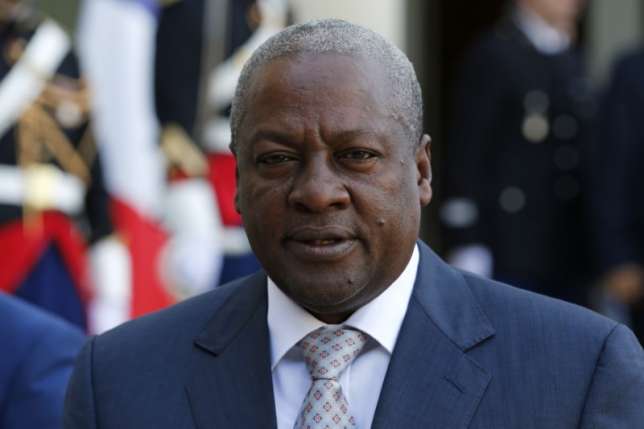
My fellow Ghanaians, My Brothers and Sisters, A while ago, I phoned Nana Addo Dankwa Akufo-Addo and offered him my congratulations for emerging the winner of the 2016 Presidential Elections.
Every election is a hard-fought battle, and this one was no exception. For those of us who choose to be contenders and go into electoral contests, we go about it as a win-lose proposition.
We believe that only one person can emerge as the winner. And while it is true that only one person can be elected President, in reality, and certainly in a democracy such as ours, every election is an opportunity for the people of this nation to express their will, to have their say in who will lead them in the shaping of Ghana’s future.
In this way, each victory belongs to the people. And the true winner is always Ghana. It is precisely on account of my belief in Ghana and its future that notwithstanding the irregularities associated with this election, I have decided at this stage to congratulate the President-elect.
With this understanding, I would like to assure the people of Ghana of my commitment to the sustenance of our country’s democracy and would work to ensure a smooth and peaceful transition to the incoming administration. I remain committed to the unity and stability of our great nation.
I am profoundly grateful to the almighty God and the people of Ghana for the opportunity to serve in the high office of President.
As President, I have done my bit and made a contribution to the political, social and economic development of our country. I would have cherished an opportunity to do even more, but I respect the will of the Ghanaian people.
I would be remiss if I did not take a moment to express my deepest gratitude to the individuals who have made this journey with me.
I wish to thank all of the people who worked on my campaign for their dedication and tireless efforts. I wish to thank the leadership of the NDC, all of our members, foot soldiers and sympathizers for their belief in the principles of social democracy and their commitment to the vision.
Likewise, I would like to thank the members of my administration for their diligent service and for bringing to fruition many of the plans we set out to accomplish—the numerous programs that have been implemented and the infrastructural projects that have been completed and ongoing.
I wish to thank my able Vice President Kwesi Amissah Arthur for his unflinching support and loyalty during our period in office. To the service commanders and men and women in uniform, I wish to extend my profound gratitude to you for your selfless service to Ghana. I thoroughly enjoyed working with you to ensure the internal and external security of our country. I am very proud of you. To organised labour, the civil and public services, traditional rulers, the clergy, workers, youth groups and all identifiable bodies, I am immensely appreciative of your contributions to the development of our country in the last four years.
I wish to thank my family: my children, my brothers, and sisters, and especially my wife, Lordina, for standing as firmly with me through the times of challenge and difficulty as they have through the times of achievement and promise.
Most importantly, I am grateful to the almighty God who has sustained us through the implementation of the Agenda for Transformation. I am eternally grateful. Ghana, this land that we all call home, is a powerful nation with a history of taking the improbable and making it possible.
We have been a leader on so many fronts, not just on this continent but also in the world–from our attainment of independence, to our development of a democracy that maintains at its core a pledge of stability and a respect for the rule of law, to our formation of much-needed peacekeeping and other humanitarian missions for other nations in need.
And we have been able to do all of these things because we have always functioned as one nation, one people.
Notwithstanding our diversity, religious faiths, ethnic groups and political affiliations, we have always recognized that we are all, ultimately, on the same side—the side of Ghana and its progress.
We see all throughout the world in countries that are much older than ours the devastation that division and intolerance bring.
So I pray that as we move forward, even as we voice our differences and possibly even disagree on agendas and decisions and other details of governance, we always keep in mind the fact of our shared destiny and the undeniable possibilities of power that exist in our unity.
It has been, without a doubt, one of the most tremendous privileges of my life to serve this great nation as President and to work on behalf of all Ghanaians.
I will leave it to history to be the judge of my time and contributions while in that highest office.
To all of the people who cheered us on, who gathered at rallies to show their support, and who queued in long lines to vote for me, I know that this is not the outcome that we wanted and hoped for, but I say to you that this day should not mark the defeat of your role in this nation’s political process.
We must do our part to ensure that the progress of all our past governments, from the very first one led by our nation’s founder, Dr. Kwame Nkrumah to this most recent one that I have led, continues—because progress does not happen all at once; it takes time and dedication.In the words of Dr. Kwame Nkrumah, “Forward ever, backward never.”
At this point let me commend the electoral Commission for living up to its constitutional duty in successfully conducting the 2016 elections. My thanks also goes to the media and all stakeholders for their role in the election.
Again, allow me to offer my sincere congratulations to the President-elect, Nana Akufo-Addo.
I thank you for your kind attention.
May God bless you all, and may God continue to bless our homeland Ghana
Demonstrations continue for third day

Protests in the Polish capital Warsaw against government plans to restrict journalists’ access to parliament have continued for a third day.
Protesters gathered outside parliament, where opposition MPs have been holding a sit-in since Friday.
Government supporters also held a demonstration in Warsaw.
Polish President, Andrzej Duda, who is aligned with the governing party but has offered to mediate, held meetings with opposition party leaders.
A spokesman for Mr Duda said the president began talks on Sunday in the hope of easing the escalating tensions.
On Saturday, journalists met the speaker of the upper house of parliament to discuss the new rules.
Although no breakthrough was made at the talks, there were signs that a compromise deal may be reached after another meeting was scheduled for Monday.
Member States move to protect Basin resources

Member countries of the Volta Basin Authority (VBA) have reviewed the challenges facing the Volta Basin and are making efforts to enhancing coordinated approach to protect and utilise the natural resources in the river.
Volta Basin, estimated to be 400,000 square kilometres, is the ninth largest basin in Sub-Saharan Africa and is shared by six countries in West Africa; Benin, Burkina Faso, Cote d’Ivoire, Ghana, Mali and Togo.
Briefing newsmen after the 7th meeting of the VBA Council of Ministers held in Abuja last weekend, the Minister of Water and Sanitation of Burkina Faso, Mr Niouga Ouedraogo, said it would be a “catastrophe” if each country decides to do what it wants with the resources in the basin.
Mr Samuel Adusei, Deputy Minister, Water Resources, Works and Housing, Ghana, said that meeting would develop a master plan that could help countries work towards utilizing the potential of the natural resources in the basin.
Adusei further said that the policies developed by the VBA would be geared towards achieving the Sustainable Development Goals (SDGs).
Jewish settlers agree to leave Amona site in occupied W/Bank

Residents of a Jewish outpost in the occupied West Bank have agreed to evacuate the area just one week before the deadline for eviction.
The community of Amona accepted a government relocation proposal with 45 votes in favour and 29 against.
Sunday’s decision comes after a meeting with Israeli Prime Minister Benjamin Netanyahu.
The Supreme Court earlier ruled that the homes were built on private Palestinian land.
Families living at the unauthorised site, or outpost, were ordered to leave the area in the northern West Bank by 25 December.
Messages posted on Twitter by representatives of the Amona community said the decision to accept the government proposal was “not an easy one”.
“We can definitely say that this decision was the most difficult one we ever took,” one tweet reads, while another adds: “All who voted FOR did that with a heavy heart.”
Mugabe to stand for 2018 election

Zimbabwe’s governing Zanu-PF party has confirmed President Robert Mugabe as its candidate for the 2018 elections.
Mr Mugabe, who is 92, has been in power since independence from Britain in 1980. At the party’s conference, the Zanu-PF youth wing even proposed that Mr Mugabe should be declared president for life. However, there have been unprecedented protests this year against Zimbabwe’s economic turmoil and Mr Mugabe’s leadership.
The Zanu-PF has also suffered serious infighting as factions battle it out to succeed Mr Mugabe once he eventually leaves.
His supporters broke into thunderous applause and chanted “tongai, tongai baba” [rule, rule father] as the Zanu-PF annual conference in the south-eastern town of Masvingo nominated Mr Mugabe on Saturday.
In his acceptance speech, Mr Mugabe called for an end to party infighting. “We agreed that conflicts should end. Infighting should end. The party ideology should be followed,” he said.
Saturday, 17 December 2016
Mikel edging closer to China move

Reports that Super Eagles and Chelsea midfielder Mikel Obi is set to move to China are credible according to some insiders at the London Club. If the move goes through, the player will be joining his team mate, Oscar in the Far East, come January.
The Nigerian has failed to make a single appearance this season for the Blues, as new manager Antonio Conte consistently overlooks him in his new 3-4-3 formation.
With Oscar set to make a sensational £52 million move to Shanghai SIPG, it’s reported that two Chinese clubs are looking at signing Mikel. Chelsea are yet to offer their veteran a new deal, with his current deal set to expire after this season.
The central midfielder has been at Stamford Bridge since 2006, and has made 374 appearances for the West London side, winning two Premier League titles, four FA Cups, two League Cups, the Europa League and the Champions League.
Last season Mikel established himself as an important player, and cemented his position in the starting eleven when Guus Hiddink took charge. But Conte has taken a blind side to his abilities, there are other stories that Ligue 1 giants Marseille are also rumoured to be interested.
Conte has revealed he has no plans to let the 2016 Olympic bronze medallist leave in January, but has conceded that a new deal is unlikely. Chelsea sits top of the Premier League, winning their last eleven matches as they chase down Arsenal’s record of 14 straight league wins.
Chinese retirees could fuel the next overseas property boom
 | |
| The Aust-China Group, a residential developer targeted to Chinese buyers based in Melbourne, has seen a notable increase in Chinese retirement investments (Credit: Getty Images) |
When Mika Sun started looking for a retirement house for his parents, he had a few non-negotiable requirements.
Decent healthcare was a must, as was a safe community and a pristine environment. It also had to be a good investment, at a price Sun - a 35-year-old network engineer at a telecommunications firm in Shanghai - could afford.
This retirement dream of palm trees and sunny skies wasn’t in China, though. Like many well-travelled Chinese, Sun found what he was looking for overseas - specifically, in Irvine, California, a city 40 miles southeast of Los Angeles in the US. He recently bought a townhouse there for his parents, and in a few years when he’s secured a US visa, he plans to move there for work and his parents will follow.
Well-to-do Chinese are increasingly investing in retirement properties overseas - both for their parents and their own golden years
Sun’s parents, who are both in their 60s, might even find it easy to acclimatise to their new, foreign home. As many of his Shanghai friends are buying properties in Irvine for themselves and their parents, they’ll be able to socialise in their native Shanghainese dialect.
“I mainly considered the community. Chinese people like to live together, so it will be more comfortable for older people to have a neighbour they can talk to,” he says. “They can walk around the community, and there are public pools, facilities, lawns and gardens. And no need to maintain it themselves, there is a professional property management to do that.”
China is facing a looming demographic crisis due to its rapidly aging society
China is facing a looming demographic crisis due to its rapidly aging society. According to the United Nations, there will be an estimated 360 million Chinese over the age of 60 in 2030 - a full quarter of the total population and more than the number of people currently living in the US.
With limited resources to care for a large retired population, not to mention growing concerns about the Chinese economy, well-to-do Chinese are increasingly investing in retirement properties overseas - both for their parents and their own golden years.
Golden years abroad
“We get asked a lot by the younger generation, ‘Is there a retirement village nearby?’” says Charles Pittar, CEO of Juwai.com, a real-estate website that lists international properties for Chinese buyers. “But we’re also getting enquiries from older Chinese who have been through a pretty significant property boom in China, they’ve generated a lot of wealth and they’re looking to retire somewhere clean, comfortable, safe, that obviously has good medical facilities.”
As property prices have skyrocketed at home and as the yuan has steadily declined in value against the dollar, Chinese investors have been pouring their money into overseas property to safeguard their wealth in recent years. Overall Chinese investment in foreign commercial and residential real estate jumped from $5.6 billion in 2012 to $34.4 billion last year, according to a report by Knight Frank Research.
And according to a 2016 survey of wealthy Chinese who had either emigrated or were considering emigrating, 60% said they would buy an overseas property in the next three years, with the US, UK, Canada and Australia as the top destinations. More than half indicated they were concerned about the continuing depreciation of the yuan.
According to a Citi report in October, outbound tourism by elderly Chinese shot up by 217% in 2015
Juwai doesn’t specifically track retirement investments among its clients, but one important indicator of the potential size of the market is the spike in interest in overseas travel by elderly Chinese in recent years. According to a Citi report in October, outbound tourism by elderly Chinese shot up by 217% in 2015, compared to the year before, and elderly tourists now comprise 20% of all tourists in China.
And as this group becomes more comfortable with travel, settling down somewhere foreign becomes less daunting.
“We actually had some Chinese consumers doing a tour of [Australian capital] Canberra recently,” Pittar says. “And one of the older family members said, ‘Gee, this looks like a wonderful place to retire.’”
Wealthy Chinese expect to lead full, exciting lives in their golden years
For many Chinese, attitudes about retirement are also shifting as they become wealthier and more independent. Another survey on retirement planning, conducted this year by Taikang Insurance and the Hurun Report, showed that wealthy Chinese expect to lead full, exciting lives in their golden years. A majority cited top-quality medical and living services, an excellent living environment and good weather as paramount concerns for their retirements, while just under half anticipated frequent travel to “broaden one’s horizons”.
And while a majority said they wanted to retire in their home city, more than a third preferred a “travel or vacation” destination like the resort island of Hainan in southern China - a far sunnier and more relaxing locale than most Chinese cities.
Planning for the senior rush
Property developers are already looking to cash in, particularly in countries considered attractive by elderly Chinese, namely Australia, Canada and the US.
The Aust-China Group, a Melbourne-based residential developer targeted to Chinese buyers, has seen a notable increase in Chinese retirement investments in the past few years and has started specifically catering to this community by helping seniors adapt to the local life. Zheng Mingyue, the company’s marketing director, says its service representatives can accompany elderly residents to the hospital, if need be, or help them set up small businesses.
Another small perk the company offers that has proven popular among retirees: free seeds to grow vegetables and flowers in their gardens and trees for the backyard, a novelty for those accustomed to apartment living in dense Chinese cities.
For Chinese retirees, Zheng ticks off the same benefits in Australia that attracted Mika Sun’s family to California - clean air, a warm climate, an excellent healthcare system and public services for senior citizens. The country’s education system is a major draw, too, she says.
They think a lot about the third generation
“What’s most interesting is they think a lot about the third generation - they would like their grandchildren to be born and study and live in Australia,” she says.
The Chinese property company Poly Real Estate is also eyeing the retiree market, according to Australian media reports, with plans for a membership-style global network of senior housing that could allow elderly Chinese to spend part of the year in Sydney or Los Angeles, while also keeping their home base in China. And in the US, another group of Chinese investors has purchased a century-old factory in Maine, according to local media reports, with plans to turn it into a five-star health and wellness resort for wealthy Chinese retirees and medical tourists, though work has yet to start on the project.
South East Asian countries, long popular with Japanese and Korean retirees, are also starting to court elderly Chinese homebuyers.
Malaysia’s “My Second Home” programme offers renewable, 10-year visas to anyone over the age of 50 who makes a deposit of $33,700 or has a monthly pension of $2,250. Thailand has a similar one-year renewable visa for retirees over 50 who make a deposit of $22,300, while the Philippines opens its doors to those desiring really early retirement - the minimum age is just 35, with a $20,000 deposit.
The Philippines is hoping an influx of elderly (and perhaps middle-aged) Chinese can help it double the number of foreign retirees living in the country to 100,000 by 2020. Already, Chinese seniors have overtaken the Japanese and Koreans as the largest group in the overseas retirement programme.
Cultural barriers
But while older people in China are generally becoming more independent and don’t want to feel like a burden to their grown children, there are still cultural barriers that may prevent them from retiring overseas on their own, says Daniel Lai, a social work and gerontology professor at Hong Kong Polytechnic University and director of the school’s Institute of Active Ageing.
Perhaps the biggest impediment is leaving their children behind
Some may struggle with the language and culture in a new country, while others are reluctant to give up their social circle in China. Perhaps the biggest impediment, however, is leaving their children behind, Lai says.
“Very seldom you see a pair or couple of older Chinese moving overseas for retirement on their own,” he says. “They would love to travel to see things, but I’m not sure many would choose to retire overseas by themselves because they want to stay close to their children, they want to stay close to their grandchildren.”
Lai says it’s much more common to see older parents moving with their children overseas for retirement and then choosing to stay put if their children move back to the mainland for work. “They’re reluctant to come back to China because they’re used to it, they’re independent, they’re healthy,” he says.
Mika Sun says his parents aren’t particularly excited about the move to California, even though he’ll be accompanying them. But he thinks they’ll come around once they get there.
“From an emotional standpoint, they will [miss China],” he says. “But to borrow a poem by [Chinese poet] Su Tung-po, ‘Where my heart feels secure and peaceful is my hometown.’”
Source: bbc.com
34 Inspirational Quotes By Prophet Muhammad (PBUH)
 |
| Ismail ibn Musa Menk |
1. Be kind, for whenever kindness becomes part of something, it beautifies it. Whenever it is taken from something, it leaves, it tarnished.
2. A good man treats women with honour.
3. The best of houses is the house where an orphan gets love and kindness.
4. However much the faith of a man increases, his regard for women increases.
5. The most perfect man in his faith among the believers is the one whose behaviour is most excellent, and the best of you are those who are the best to their wives.
6. The best among you is the one who doesn't harm others with his tongue and hands.
7. The greatest of richness is the richness of the soul.
8. There is reward for kindness to every living thing.
9. Strive always to excel in virtue and true.
10. The greatest jihad(struggle/striving) is to battle your own soul to fight the evil within yourself.
11. The strongest among you is the one who controls his anger.
12. God does not look at your forms and possessions but he looks at your hearts and your deed.
13. Riches are not from an abundance of worldly good but from a contented mind.
14. Exchange gifts, you will love one another. 15. The best among you are those who have the best manners and character.
16. No two things have been combined better than knowledge and patience.
17. Tell people of glad tidings and do not push them away.
18. The believer does not slander, curse or speak in an obscene or foul manner.
19. A kind word is a form of charity.
20. A father gives nothing better than good education.
21. Feed the hungry and visit a sick person, and free the captive, if he is unjustly confined. Assist any person oppressed whether Muslim or non-muslim
22. Seek knowledge from cradle to the grave.
23. Do not waste water even if you were at a running stream.
24. A white has no superiority over a black nor a black has any superiority over white except by piety and good actions.
25. When a thing disturbs the peace of your heart give it up.
26. do not do evil to those who do evil to you, but you deal with them with forgiveness and kindness.
27. He is not a true believer who eats his fill while his neighbour is hungry.
28. Speak good or remain silent.
29. What has reached you was never ment to miss you, and what has missed you was never meant to reach you.
30. When you see a person who has been given more than you in money and beauty, look to those who have been given less than you.
31. Make things easy for people and do not difficult. give people good news and bring them joy, and do not turn them away.
32. Remember your own faults when you want to mention of others.
33. Those who are patient in adversity and forgive wrongs are doers of excellent.
34. Happy is the man who avoid hardship, but how fine is the man who is afflicted and shows endurance
An Advice: Raising tomorrow leaders (18 Tips) By Mufti Ismail Menk

1. Praise your child, even if they get 4/10 in exam, praise your child in front of others.
2. Never make your child feel that he is useless. Never favour one child over the other.
3. Every time we speak with our children speak with respect, say "thank you", etc. Don't use slang i.e gimmi instead say 'please give me'; use clear words, be polite and never swear. (Prophet said, do not use slang as it will decrease your respect).
4. You need to bear in mind when your child is young that this is just a child, don't take away their playing time by treating them like an adult. If we do this, they will rebel in life.
5. We need to assist our children to make decisions. He or she must be taught to make decisions. Acknowledge them, guide them by talking to them, if they want to go for something, organize the plan for them.
6. Whenever you have decisions to be made ask your child of his or her opinion. For example, if you are going to buy a car, ask their opinion, where they like to eat, or what colour they like for a car, this develops the habit of consultancy in them.
7. Depending on the house we are living in, we would perhaps have a corner; write the name of the child there, as it be their territory. Put their certificates on the wall; this makes them confident of themselves.
8. Teach your child to follow you to read salah. Lead them rather than instructing, it's a more powerful way. What your child sees you doing they will remember forever. Start instructing them to read salah at the age of 7, this will help them and make it easy for them to follow when they reach puberty when it becomes compulsory on them.
9. We need to teach our children how to put forward their opinion, how you would disagree to a point. Don't use swear words when you disagree on anything as this will inculcate in your child as he is watching you being aggressive. Children have much more grasping power than us and they pick up things very fast.
10. Encourage your child to ask questions, and try to answer each question they ask else they will get it from a wrong source. Praise their questions at times.
11. Always fulfill your promises on to your children. Do not make big promises which you cannot fulfill; this makes them develop a habit of making false promises. If you fail to fulfill any promise, explain the reason why.
12. Very important to teach our child how to develop skills of being a member of a group. Team work is very important; this teaches them to give chances to people in life rather than always competing.
13. Make dua for your children. Even if they have gone astray, pray for them.
14. Tell them you might fail once, but never lose hope. Teach them how they should react to a failure.
15. Apologize to your child if you have made a mistake, this teaches your child to repent to Allah. Don't raise ifs and buts when you are wrong; there are no ifs and buts when it comes to repentance.
16. Have a few surprises for your children, to praise their deed of good, give them recognition at home, that this surprise is for you for so and so good you did.
17.We need to make sure that we train our children to read a portion of Quran daily, according to their capacity.
18. Tell your child repeatedly that you love them, tell them how gorgeous they are and how important they are to you, hug them, its a sunnah to kiss your children. Also teach them to always appreciate any legal gifts by saying thank you.
If you feel this message will help one or more of your family or friends, forward this message to them. Perhaps this might be beneficial for them and you will get the ajar for that!
Controlling your kids’ minds: Quick and dirty tricks for parents and teachers

I was engaged in an intense negotiation with my six-year old for many months. We were at an impasse until a couple of days ago. He wanted a bicycle and also wanted his tablet repaired or another one bought for him. However, when his mother and I encountered the study that said too much time on TV and tablet could lead to absentmindedness in children, we decided to cut back his access to electronics. So this was an opportunity for me.
I told him to choose between a bicycle and a tablet. He chose the tablet. His choice was logical. He played safe and chose the familiar – he has been with tablets since he was two. On the other hand, although he’s interested in bicycles, he can’t ride one, even with a gun to his head. Even though he’s had two bicycles in the past, he’s completely hopeless with the machine.
Since the tablet wasn’t our choice for him, what to do? Our negotiation stalled for weeks – during which time, I simply ignored his request. Of course, we could have gone ahead to make the choice for him. But we wanted him to be part of the decision making to teach him the value of things and in matters like this, consultation is important. Later, I decided to introduce a decoy among the options – a technique perfected by behavioral economists. As expected, he chose the bicycle this time. Yippee!
On the utility of decoys, Dan Ariely, a behavioral economist and author of “Predictably Irrational” wrote: “Once you see the decoy effect in action, you realize that it is the secret agent in more decisions than we could imagine. It even helps us decide whom to date—and, ultimately, whom to marry.”
Continue reading to see how I introduced the decoy and to learn other techniques to control the minds and behaviours of your children. The techniques are taken from psychology, negotiation, philosophy, behavioural economists and our old, wise parents.
Here are the fancy names of the techniques we are going to learn shortly: setting the default, splitting the issue, abstraction, using a decoy, synchronous activity and participation.
Synchronization
It is said that if you have a child, you’re a parent, but when you have two or more, you’re a referee. What if you want your children to cooperate and stop fighting? Or if you’re a teacher, you want to get them to pay attention and do group work? Get them to do a synchronized activity. That would give you what you want.
For instance they can sing together. Match in step together. Research has shown that when participants were asked to do an activity with others, they create an emotional bond and are more likely to cooperate. It may be the reason why God almighty prefers that we pray in groups. Muslims know that you get more reward when you pray in a group. Why do you think every country has a national anthem and we are always required to sing the anthems together? Why do our military march in step? Why do football supporters sing together?
This is supported by the research of Stanford University psychologists Scott S. Wiltermuth and Chip Heath who conducted series of experiment to confirm the effect that synchronous movement affects group interaction and bonding. Summary: if you desire cooperation among the children, get them to do a synchronized activity – singing rhymes, praying, marching and so forth.
Participation – making them work hard for it
Do you have a child, like my son, who doesn’t like to eat? Make them participate in cooking the food. They are likely to eat it now, because they can claim ownership of the outcome. Why does this work?
Eden Dranger explains this in an article for Cracked.com: “Because we’re all narcissistic shitheads like that. Coming away from any task with the sense that you’ve accomplished something tangible and real is going to feel like a win. Again, take your shitty kids for example: they might instinctively kick and scream at the sight of vegetables, but if you ask them to participate in preparing and cooking a meal with those vegetables, they’ll probably eat them just because they’re curious how this thing they helped build will taste.
“People will always like stuff they put their work and time into, even if it’s shitty. IKEA exploits this better than anyone by making you work the hardest for their products. It’s a nightmare while you’re in the midst of the project, but once you’re finished, you feel like you’ve done something not everyone has the ability to do. You saw that mountain, you climbed it, and you’ve got a rickety-ass bookshelf to prove it.”
To be continued.
Friday, 16 December 2016
Kashmiri Muslims react upon seeing a hair from the beard of Prophet

Monday, 12 December 2016
Buhari, others to ask Jammeh to step down

West African leaders will visit Gambia today to try to persuade incumbent President Yahya Jammeh to agree “to leave office” after his defeat at the ballot box, a Senegalese foreign ministry source said Monday.
The delegation headed by Liberian leader Ellen Johnson Sirleaf, current chair of the Economic Community of West African States (ECOWAS), will include Nigerian President Muhammadu Buhari, Sierra Leone leader Ernest Bai Koroma and outgoing Ghanaian President John Dramani Mahama, the source said. “These leaders will ask him to leave office,” the source added.
Senegalese Foreign Minister Mankeur Ndiaye said an ECOWAS delegation was previously due in Banjul last week but Jammeh did not allow them to visit.
Barrow is due today to welcome the ECOWAS delegation, which will also include UN representatives, which the president-elect said gave him hope that he would soon take power.
It’s better to have many wives than to have one wife – Catholic Priest

“The Whiteman that brought Christianity to us mixed the religion with his culture and Africans just accepted it like that at the expense of our culture. "If we did not incorporate parts of our culture into the way we worship God, our culture would in no distant time go into extinction,” he said.
Ngbe explained that local foods should henceforth be used for communion in the Catholic Church instead of using products imported from Europe. The priest also said meaningful local names should be given to people during Baptism and Confirmation in Catholic Churches as against using “English names.”
Ngbe urged members to imbibe the habit of wearing local dresses during weddings as well as using local languages for Mass. He said that anybody who practiced monogamy before accepting Christ should be given equal treatment in the Church with those that have only one wife. “It is better to have many wives at home than to have only one and yet have many girl friends and lovers outside,” the priest said.
Ngbe therefore commended the Yoruba people for incorporating their culture in the way they practiced both Christianity and Islam and urged others to emulate them.
Read more at: http://www.vanguardngr.com/2016/12/it-is-better-to-have-many-wives-than-to-have-one-or-many-girl-friends-lovers-catholic-priest/
Sunday, 11 December 2016
AU observer mission applauds Ghana polls

The African Union observer mission to the just concluded 2016 presidential and parliamentary elections in Ghana has adjudged the poll as peaceful, transparent and credible.
After an assessment of pre-election and Election Day activities in the West African country, the regional election monitoring team asserted that despite isolated pre-election incidents the election was conducted under peaceful environment.
In the preliminary communiqué released at the weekend, the AU observer mission team while acknowledging Ghana’s excellent democratic culture, however canvassed innovations in the political system.
For instance, the mission recommended that political parties should refrain from the use of vigilante groups and other personal security paraphernalia, stating that security agencies were capable of protecting political aspirants. This it noted would considerably reduce tension before election.
The Communiqué which was read by the head of the team, former Namibian President Hifikepunye Pohamba, further suggested that the National Peace Council should be institutionally strengthened and effectively decentralized to regions, district councils and if need be to the villages.
The AU had noted with concern that women participation in politics in the country was generally low. Out of 1,168 parliamentary candidates, only 136 were women, representing 11.7 percent, which was lower than the figure in the 2012 election and far below 30 percent regional and global thresholds for women involvement in politics.
The observer mission report stated, “The Electoral Commission was adequately prepared for the 2016 polls and adhered to the electoral challenge.”
Subscribe to:
Posts (Atom)